

The process of manufacturing turnkey exhibition stands
Вступ до виготовлення виставкових стендів
1. Introduction
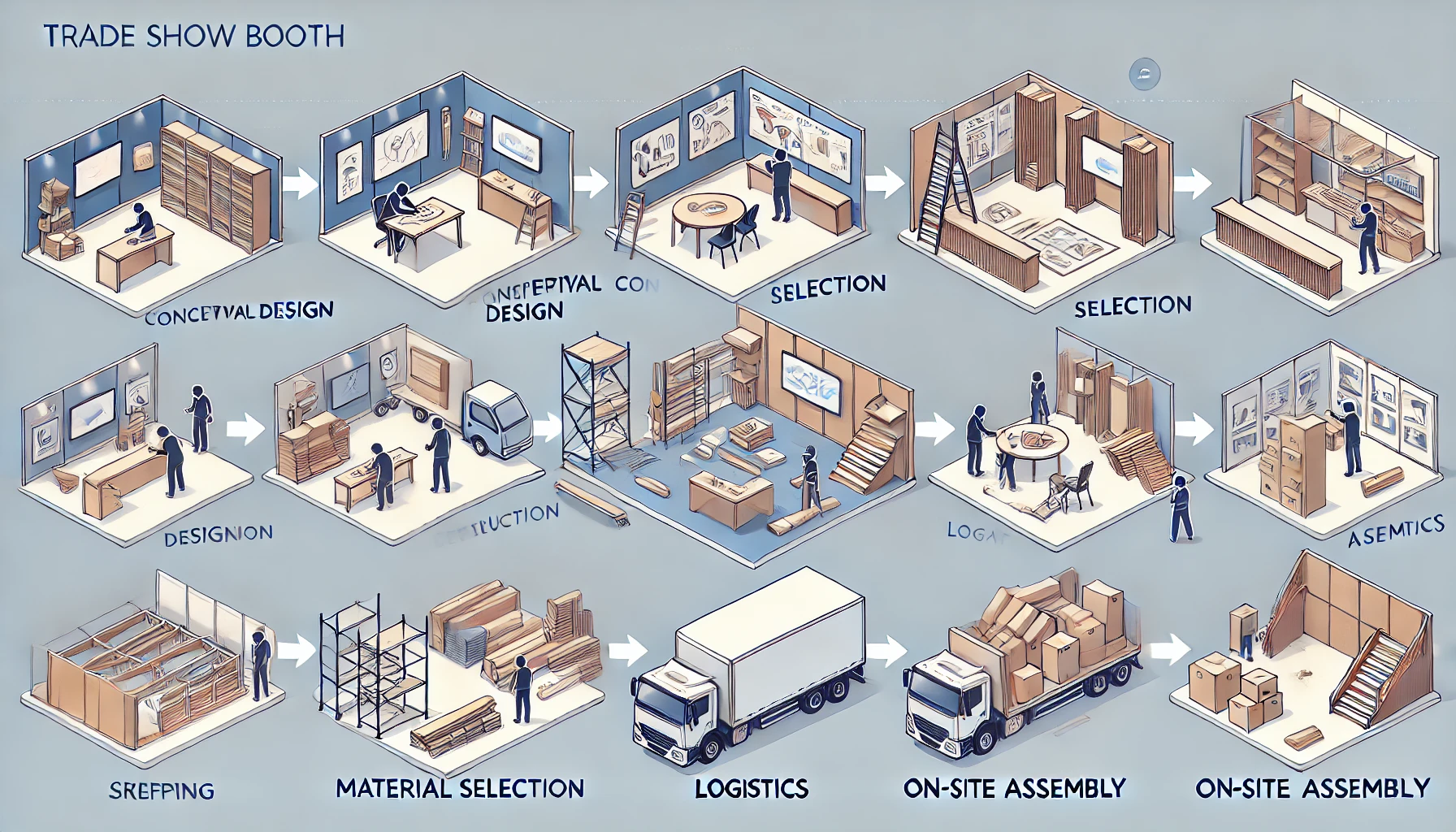
An exhibition stand is not just a structure, but an important tool for companies participating in exhibitions and forums. A high-quality stand helps attract attention, create a positive impression of the brand, and establish new contacts. This article describes the complete process of manufacturing a turnkey stand — from planning to dismantling — so that companies can make informed decisions and be confident in the quality of the final result.
2. Analysis of goals and objectives
At the outset, it is important to define the goals of participating in the exhibition. Do you need to introduce a new product, expand your customer base, or emphasize your company’s image? The answers to these questions will help you understand what tasks the stand should perform.
Next, it is important to analyze the target audience. For example, if the stand is aimed at the end consumer, it is important to make it interactive and attractive; if it is aimed at business partners, create a comfortable meeting area.
The key message of the stand should also be clear: what value or uniqueness do you want to share with visitors? This will ensure a consistent style in design and presentation.
3. Developing the stand concept
When developing the concept, it is important to consider the characteristics of the brand identity. This includes the use of corporate colors, logos, and other visual elements associated with the company.
The type of stand is important: it can be mobile, modular, or custom. Each has its own advantages, depending on your budget and needs.
Space zoning involves dividing the stand into different zones, such as a demo area for products, a place for negotiations, and a place for presenting information about the company. It is important that each zone is harmoniously integrated into the overall concept of the stand.
4. Design and visual elements development
At this stage, detailed stand layouts are created, including sketches and 3D models. This allows you to see the final result even before production begins.
Lighting is very important: it not only draws attention to the main elements of the stand, but also creates a comfortable atmosphere. It is important that the lighting emphasizes the main accents.
Interactive elements, such as screens or VR zones, are also important. They help to create more visitor engagement, which contributes to better brand recall.
5. Selection and purchase of materials
The materials used to build the stand must correspond to both the concept and the budget of the project. For example, the use of metal or plastic increases the strength of the structure, but sometimes environmentally friendly materials are more in line with current trends.
The purchase of materials requires cooperation with reliable suppliers who will ensure quality and timely delivery.
6. Production of the stand structure
The production of an exhibition stand takes place in stages: cutting, welding, assembly, processing of materials, etc. It is important that quality control is carried out at each stage to avoid possible defects.
After the stand is manufactured, preliminary assembly is carried out in the workshop to check for design compliance. This allows potential problems to be identified and corrected before installation at the exhibition.
7. Logistics and delivery of the stand to the event venue
Proper organization of stand delivery is an important step. It is necessary to take into account the time, weight, and size of the stand, as well as choose a vehicle that will ensure reliable transportation.
The stand must be packed securely to protect its components from possible damage. The contractor usually selects a logistics company that guarantees timely delivery to the exhibition venue.
8. Assembly of the stand on site
Stand assembly is a critical stage that involves preparing the site for construction, setting up lighting, and connecting electricity and equipment.
Each element of the stand is checked to ensure its stability and functionality. Before the exhibition begins, all interactive elements, lighting, and other functional parts of the stand must be tested.
9. Dismantling and storage of the stand
After the exhibition is over, the stand is dismantled, disassembled, and packed for transportation to the storage location.
Storage of elements is important for stands that are planned to be reused. It is important to comply with storage conditions to avoid damage and ensure a long service life of the structure.
10. Conclusion
The production of a turnkey exhibition stand is a complex process that requires a professional approach and consideration of many details. Each stage, from planning to installation, is important for creating an effective stand that contributes to the achievement of the company’s marketing goals.
Working with professionals ensures quality at all stages, saves time, and allows you to get the most out of participating in exhibitions.